There are moments when you don’t need advice. You need someone else’s words to hand you a mirror — something short enough to sit with, honest enough to trust.
That’s what this page is. Not a motivational push, not a list of pretty lines pulled from a search results page. A collection of quotes from people who actually lived through change, loss, growth, and the quiet work of figuring out who they were becoming — and said something true about it along the way.
Read it in one sitting, or come back to one section when you need it. Either way works.
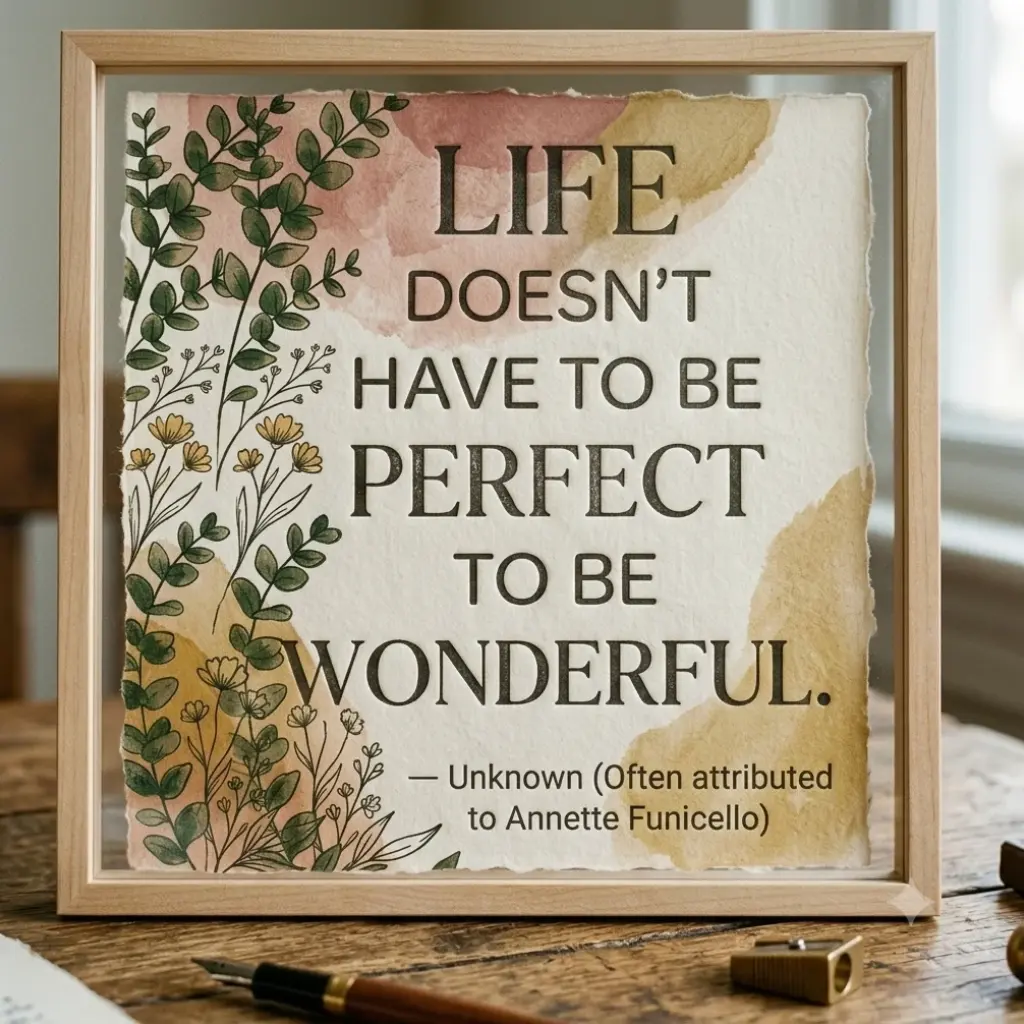
Featured Life Quote
How I Chose These Life Quotes (and What I Left Out)
I didn’t pull these from other quote sites. Every line here is attributed to a real, identifiable person — a writer, scientist, philosopher, or public figure whose words are documented, not a floating internet quote with no clear source.
I left out a few quotes you’ll probably recognize from other lists. Some of the most-shared “life quotes” online turn out to be misattributed — credited to Einstein, Twain, or Gandhi when there’s no real record they said them. If I couldn’t trace a quote back to something the person actually wrote or said, it didn’t make this page.
I also kept the tone here grounded rather than dramatic. Life doesn’t usually change because of one perfect sentence. It changes because a sentence lands at the right moment and gives you something to think about for the rest of the day. That’s what I was going for with every quote below.
Life Quotes About Change and Uncertainty
Quotes on Unexpected Change
1.
“No man ever steps in the same river twice, for it’s not the same river and he’s not the same man.” — Heraclitus (c. 535–475 BC), Greek philosopher
Practical Takeaway: Stop expecting a situation — or yourself — to stay exactly as you last left it. Check your assumptions before you react to something “the way you always have.”
2.
“It is not the strongest of the species that survives, but the one most responsive to change.” — Charles Darwin (1809–1882), naturalist
Practical Takeaway: Next time change shows up uninvited, ask what it’s asking you to adjust — not what it’s taking away.
3.
“The only way to make sense out of change is to plunge into it, move with it, and join the dance.” — Alan Watts (1915–1973), philosopher and writer
Practical Takeaway: Pick one thing you’ve been resisting this week and take the smallest possible step into it today, instead of waiting to feel ready.
4.
“All that you touch, you change. All that you change, changes you.” — Octavia Butler (1947–2006), author
Practical Takeaway: Notice how a recent change you caused — a decision, a conversation, a move — has already started changing you back. Name it out loud.
5.
“All changes, even the most longed for, have their melancholy.” — Anatole France (1844–1924), writer
Practical Takeaway: If a change you wanted still feels a little sad, that’s not a sign you chose wrong. Let both feelings sit at the table without picking one.
6.
“There is a certain relief in change, even though it be from bad to worse.” — Washington Irving (1783–1859), author
Practical Takeaway: When you’re stuck, remember that even an imperfect next step can feel lighter than standing still. Movement itself is sometimes the relief.
7.
“It is change, continuing change, inevitable change, that is the dominant factor in society today.” — Isaac Asimov (1920–1992), author
Practical Takeaway: Build one small habit of flexibility into your week — a new route, a new way of solving a familiar problem — so change doesn’t only show up as a shock.
8.
“Not everything that is faced can be changed, but nothing can be changed until it is faced.” — James Baldwin (1924–1987), author
Practical Takeaway: Name the one thing you’ve been avoiding looking at directly. You don’t have to fix it today — just stop looking away from it.
9.
“There are far, far better things ahead than any we leave behind.” — C.S. Lewis (1898–1963), author
Practical Takeaway: Write down one thing you’re grieving the loss of, and next to it, one thing that’s only possible now that it’s gone.
10.
“If you change the way you look at things, the things you look at change.” — Wayne Dyer (1940–2015), author
Practical Takeaway: Take a situation that’s been frustrating you and describe it out loud from a completely neutral angle, as if you were a stranger watching. See what shifts.
Quotes on Choosing to Change
11.
“Everyone thinks of changing the world, but no one thinks of changing himself.” — Leo Tolstoy (1828–1910), author
Practical Takeaway: Before you try to fix a situation involving someone else, ask what 10% of it is actually yours to change.
12.
“They always say time changes things, but you actually have to change them yourself.” — Andy Warhol (1928–1987), artist
Practical Takeaway: Pick one thing you’ve been “waiting to feel different about” and do the one action that would actually move it, today.
13.
“Becoming is better than being.” — Carol Dweck (b. 1946), psychologist
Practical Takeaway: Next time you catch yourself saying “I’m just not a _ person,” rewrite it as “I haven’t practiced _ yet.”
14.
“Almost everything will work again if you unplug it for a few minutes, including you.” — Anne Lamott (b. 1954), author
Practical Takeaway: Give yourself an actual 10-minute break before your next hard decision instead of pushing through tired.
15.
“If you don’t like something, change it. If you can’t change it, change your attitude.” — Maya Angelou (1928–2014), author and poet
Practical Takeaway: Sort your current frustrations into two lists: what you can act on this week, and what you need to stop carrying emotionally.
16.
“Progress is impossible without change, and those who cannot change their minds cannot change anything.” — George Bernard Shaw (1856–1950), playwright
Practical Takeaway: The next time you’re arguing a point, pause and genuinely consider the opposite case for sixty seconds before responding.
17.
“It is not necessary to change. Survival is not mandatory.” — W. Edwards Deming (1900–1993), statistician
Practical Takeaway: Use this as a gut check on a habit or routine you’ve outgrown. If it’s not serving you anymore, that’s permission enough to drop it.
18.
“Some of us think holding on makes us strong, but sometimes it is letting go.” — Herman Hesse (1877–1962), author
Practical Takeaway: Identify one thing you’re gripping out of habit rather than benefit, and practice loosening your hold on it this week.
19.
“Change is hardest at the beginning, messiest in the middle, and best at the end.” — Robin Sharma (b. 1964), author
Practical Takeaway: If you’re in the “messy middle” of something right now, that’s not a sign you’re failing — it’s a sign you’re on schedule.
Life Quotes About Growth and Self-Discovery
Quotes on Learning From Mistakes
20.
“Mistakes are part of the dues one pays for a full life.” — Sophia Loren (b. 1934), actress
Practical Takeaway: Reframe your last mistake as proof you were actually doing something, not proof you’re bad at it.
21.
“Mistakes are the portals of discovery.” — James Joyce (1882–1941), author
Practical Takeaway: Go back to a recent mistake and find the one useful thing it taught you that success wouldn’t have.
22.
“Experience is simply the name we give our mistakes.” — Oscar Wilde (1854–1900), writer
Practical Takeaway: Stop calling your past decisions “wasted time.” Call them tuition, and move on.
23.
“Mistakes are painful when they happen, but years later a collection of mistakes is what is called experience.” — Denis Waitley (b. 1933), author
Practical Takeaway: Write down three “mistakes” from five years ago. Notice how differently they read to you now.
24.
“You must learn from the mistakes of others. You can’t possibly live long enough to make them all yourself.” — Sam Levenson (1911–1980), humorist
Practical Takeaway: Ask someone a generation ahead of you what they’d do differently. Actually use the answer.
25.
“The only real mistake is the one from which we learn nothing.” — Henry Ford (1863–1947), industrialist
Practical Takeaway: Before you move on from a setback, write one sentence about what you’ll do differently next time — then actually do it.
26.
“Character is power.” — Booker T. Washington (1856–1915), educator and author
Practical Takeaway: Notice how you handle a mistake when no one’s watching. That’s the version of you that’s actually growing.
27.
“It is impossible to live without failing at something, unless you live so cautiously that you might as well not have lived at all.” — J.K. Rowling (b. 1965), author
Practical Takeaway: Ask yourself honestly: is there something you’ve avoided trying purely to protect your record of never failing?
28.
“I have not failed. I’ve just found 10,000 ways that won’t work.” — Thomas Edison (1847–1931), inventor
Practical Takeaway: Keep a running list of “ways that didn’t work” on your current project. It’ll shrink your options faster than starting over each time.
29.
“Fail early, fail often, but always fail forward.” — John Maxwell (b. 1947), author
Practical Takeaway: After your next setback, ask one question: what does “forward” look like from here? Then take that one step.
Quotes on Becoming Who You Are
30.
“To be nobody but yourself in a world which is doing its best, night and day, to make you everybody else, means to fight the hardest battle.” — E.E. Cummings (1894–1962), poet
Practical Takeaway: Notice one opinion or preference you’ve been quietly editing to match everyone around you. Say the real one out loud this week.
31.
“Who looks outside, dreams; who looks inside, awakes.” — Carl Jung (1875–1961), psychiatrist
Practical Takeaway: Spend five minutes today writing about what you actually want, without checking it against what anyone else would think.
32.
“We don’t see things as they are, we see them as we are.” — Anaïs Nin (1903–1977), author
Practical Takeaway: Next time you judge someone’s choice harshly, ask what it says about your own fears rather than about them.
33.
“When I dare to be powerful, to use my strength in the service of my vision, then it becomes less and less important whether I am afraid.” — Audre Lorde (1934–1992), writer and activist
Practical Takeaway: Do the thing you’re afraid of anyway this week, and let the fear ride along instead of waiting for it to leave first.
34.
“No need to hurry. No need to sparkle. No need to be anybody but oneself.” — Virginia Woolf (1882–1941), author
Practical Takeaway: Pick one interaction today where you drop the performance and just say the plain, honest version of what you think.
35.
“We must be willing to let go of the life we planned so as to have the life that is waiting for us.” — Joseph Campbell (1904–1987), author
Practical Takeaway: Write down one version of your life you’re still holding onto that no longer fits. Let it go on paper first.
36.
“Owning our story and loving ourselves through that process is the bravest thing that we’ll ever do.” — Brené Brown (b. 1965), author and researcher
Practical Takeaway: Tell one person the real version of a hard chapter in your life, not the polished version.
37.
“If there’s a book that you want to read, but it hasn’t been written yet, then you must write it.” — Toni Morrison (1931–2019), author
Practical Takeaway: Notice the thing you keep wishing existed — a resource, a community, a way of doing something — and ask if you’re actually the one meant to build it.
38.
“First say to yourself what you would be; and then do what you have to do.” — Epictetus (c. 50–135 AD), Stoic philosopher
Practical Takeaway: Write one sentence describing the person you’re trying to become, then check whether your calendar this week reflects it.
39
“Let everything happen to you: beauty and terror. Just keep going. No feeling is final.” — Rainer Maria Rilke (1875–1926), poet
Practical Takeaway: Whatever you’re feeling most intensely right now, remind yourself it’s information, not a life sentence.
Life Quotes About Loss and Letting Go
Quotes on Grief and Endings
40
“Grief is the price we pay for love.” — Queen Elizabeth II (1926–2022)
Practical Takeaway: If grief feels heavy right now, let that heaviness stand as proof of how much the relationship mattered — not as something to rush past.
41
“The pain now is part of the happiness then. That’s the deal.” — C.S. Lewis (1898–1963), author
Practical Takeaway: Instead of trying to separate the good memories from the current pain, let them stay linked. That’s what makes them real.
42
“Loss is nothing else but change, and change is Nature’s delight.” — Marcus Aurelius (121–180 AD), Roman emperor and philosopher
Practical Takeaway: Write down one thing that ended recently, and one honest sentence about what it made room for, even if you didn’t want the trade.
43
“The reality is that you will grieve forever. You will not ‘get over’ the loss… you will learn to live with it.” — Elisabeth Kübler-Ross (1926–2004), psychiatrist
Practical Takeaway: Stop measuring your grief by whether it’s “over.” Measure it by whether you’re able to carry it and still show up for your day.
44
“Unable are the loved to die, for love is immortality.” — Emily Dickinson (1830–1886), poet
Practical Takeaway: Do one small thing today that keeps a memory of someone you’ve lost actively alive — a recipe, a phrase, a habit you picked up from them.
45
“Death is not extinguishing the light; it is putting out the lamp because the dawn has come.” — Rabindranath Tagore (1861–1941), poet
Practical Takeaway: If you’re facing an ending, try describing it as a transition rather than a stop. Notice if that shifts how heavy it feels.
46
“Grief can’t be shared. Everyone carries it alone, his own way.” — Anne Morrow Lindbergh (1906–2001), author
Practical Takeaway: Stop comparing how you’re grieving to how someone else seems to be handling the same loss. Yours doesn’t need to match theirs.
47
“The deeper that sorrow carves into your being, the more joy you can contain.” — Khalil Gibran (1883–1931), poet
Practical Takeaway: Notice one way a hard season has actually widened your capacity to feel — for others, for beauty, for gratitude.
48
“It has been said, ‘time heals all wounds.’ I do not agree. The wound stays. In time, the mind protects itself by covering the wound.” — Rose Kennedy (1890–1995)
Practical Takeaway: Give yourself permission to still feel a loss years later without treating it as a failure to “move on.”
49
“‘Tis better to have loved and lost than never to have loved at all.” — Alfred, Lord Tennyson (1809–1892), poet
Practical Takeaway: When a loss makes you want to guard yourself from caring that much again, notice the cost of that choice too.
Quotes on Moving Forward
50
“The world breaks everyone, and afterward, many are strong at the broken places.” — Ernest Hemingway (1899–1961), author
Practical Takeaway: Look at a place in your life that’s been “repaired” after a hard season, and notice it might actually be stronger there now than before.
51
“The greatest glory in living lies not in never falling, but in rising every time we fall.” — Nelson Mandela (1918–2013)
Practical Takeaway: Track your “getting back up” moments this month, not just your setbacks. That’s the real measure of progress.
52
“In three words I can sum up everything I’ve learned about life: it goes on.” — Robert Frost (1874–1963), poet
Practical Takeaway: On a hard day, remind yourself you don’t have to solve everything today — you only have to let today move into tomorrow.
53
“We tell ourselves stories in order to live.” — Joan Didion (1934–2021), writer
Practical Takeaway: Notice the story you’re currently telling yourself about a hard situation. Ask if it’s helping you move forward or keeping you stuck.
54
“I am not afraid of storms, for I am learning how to sail my ship.” — Louisa May Alcott (1832–1888), author
Practical Takeaway: Instead of waiting for calm to feel confident, practice one small skill this week that helps you handle the current chaos better.
55
“When we are no longer able to change a situation, we are challenged to change ourselves.” — Viktor Frankl (1905–1997), psychiatrist and author
Practical Takeaway: Identify one situation you truly can’t control right now, and redirect your energy toward the one thing inside it you can.
56
“And once the storm is over, you won’t remember how you made it through… but one thing is certain. When you come out of the storm, you won’t be the same person.” — Haruki Murakami (b. 1949), author
Practical Takeaway: Instead of rushing to feel “back to normal” after a hard season, get curious about who you’ve actually become through it.
57
“It is never too late to be what you might have been.” — George Eliot (1819–1880), author
Practical Takeaway: Name one thing you’ve written off as “too late for.” Check whether that’s actually true, or just familiar.
58
“When you can’t go back, you have to worry only about the best way forward.” — Paulo Coelho (b. 1947), author
Practical Takeaway: Stop replaying the version of events where you’d chosen differently. Spend that energy on your next decision instead.
59
“Never underestimate the power of dreams and the influence of the human spirit.” — Wilma Rudolph (1940–1994), Olympic athlete
Practical Takeaway: Write down one goal you quietly shelved. Give it fifteen minutes of real attention this week.
Life Quotes About Finding Meaning and Purpose
Quotes on Purpose and Direction
60
“He who has a why to live can bear almost any how.” — Friedrich Nietzsche (1844–1900), philosopher
Practical Takeaway: When something feels unbearably hard right now, reconnect with your “why” behind it before you decide whether to quit.
61
“Go confidently in the direction of your dreams. Live the life you have imagined.” — Henry David Thoreau (1817–1862), author
Practical Takeaway: Take one concrete step this week toward the life you actually picture for yourself, not the one you assume you’re supposed to want.
62
“Tell me, what is it you plan to do with your one wild and precious life?” — Mary Oliver (1935–2019), poet
Practical Takeaway: Write an honest one-paragraph answer to this question. Don’t edit it for anyone else’s approval.
63
“It is good to have an end to journey toward; but it is the journey that matters, in the end.” — Ursula K. Le Guin (1929–2018), author
Practical Takeaway: Notice one goal you’re rushing toward without enjoying the work itself. Slow down on it this week, on purpose.
64
“The purpose of life is to live it, to taste experience to the utmost, to reach out eagerly and without fear for newer and richer experience.” — Eleanor Roosevelt (1884–1962)
Practical Takeaway: Say yes to one thing this week purely because it’s new, not because it’s productive.
65
“Success is not the key to happiness. Happiness is the key to success. If you love what you are doing, you will be successful.” — Albert Schweitzer (1875–1965), physician and philosopher
Practical Takeaway: Notice which of your current goals you’re chasing because you actually enjoy the process, and which you’re chasing only for the outcome.
66
“The greatest use of a life is to spend it on something that will outlast it.” — William James (1842–1910), philosopher
Practical Takeaway: Name one thing you’re building or contributing to right now that will still matter after you’ve moved on from it.
67
“What lies behind us and what lies before us are tiny matters compared to what lies within us.” — Ralph Waldo Emerson (1803–1882), essayist
Practical Takeaway: Stop measuring today by circumstances outside your control. Name one inner strength you’re not using enough right now.
68
“Where there is no vision, there is no hope.” — George Washington Carver (1864–1943), scientist
Practical Takeaway: If you’ve been running on autopilot, spend ten minutes writing down where you actually want to be in a year.
69
“The most difficult thing is the decision to act, the rest is merely tenacity.” — Amelia Earhart (1897–1937), aviator
Practical Takeaway: Stop waiting to feel fully ready. Make the decision first, and let the follow-through catch up.
Quotes on Living Intentionally
70
“How we spend our days is, of course, how we spend our lives.” — Annie Dillard (b. 1945), author
Practical Takeaway: Look honestly at how you spent yesterday. Ask if it matches how you’d want to describe your life in general.
71
“The little things? The little moments? They aren’t little.” — Jon Kabat-Zinn (b. 1944), mindfulness teacher
Practical Takeaway: Fully notice one ordinary moment today — a meal, a conversation, a walk — instead of rushing through it toward the next thing.
72
“It does not matter how slowly you go as long as you do not stop.” — Confucius (551–479 BC), philosopher
Practical Takeaway: If progress on something important feels slow, measure it against last month instead of against some ideal pace.
73
“When I let go of what I am, I become what I might be.” — Lao Tzu, ancient Chinese philosopher
Practical Takeaway: Notice one label you’ve outgrown — a role, a habit, an old identity — and stop introducing yourself with it.
74
“Think of all the beauty still left around you and be happy.” — Anne Frank (1929–1945)
Practical Takeaway: Name three ordinary things around you right now that are genuinely good. Let that be enough for a moment.
75
“Nothing is impossible, the word itself says ‘I’m possible’!” — Audrey Hepburn (1929–1993), actress
Practical Takeaway: Take the thing you’ve labeled “impossible” and rewrite it as “not yet figured out.” Notice how that changes your next move.
76
“Once you replace negative thoughts with positive ones, you’ll start having positive results.” — Willie Nelson (b. 1933), musician
Practical Takeaway: Catch one recurring negative thought today and consciously replace it with a more accurate, kinder one.
77
“The biggest adventure you can take is to live the life of your dreams.” — Oprah Winfrey (b. 1954), media executive
Practical Takeaway: Do one thing today that your “dream life” version of you would do, even in a small way.
78
“The way to get started is to quit talking and begin doing.” — Walt Disney (1901–1966), entrepreneur
Practical Takeaway: Pick the plan you’ve talked about most and haven’t started. Do the first ten minutes of it today.
79
“Desire is a contract you make with yourself to be unhappy until you get what you want.” — Naval Ravikant (b. 1974), entrepreneur
Practical Takeaway: Notice one thing you’re chasing that’s quietly stealing your contentment in the present. Ask if the trade is worth it.
Short Life Quotes for Everyday Reflection
80
“Life is long if you know how to use it.” — Seneca (c. 4 BC–65 AD), Stoic philosopher
Practical Takeaway: Spend today’s free hour on something that actually matters to you instead of something that just fills time.
81
“Sometimes you will never know the value of a moment until it becomes a memory.” — Dr. Seuss (Theodor Geisel, 1904–1991), author
Practical Takeaway: Pay closer attention to one ordinary moment today, on purpose, before it’s gone.
82
“There are only two or three human stories, and they go on repeating themselves as fiercely as if they had never happened before.” — Willa Cather (1873–1947), author
Practical Takeaway: Next time your struggle feels isolating, remember it’s an old human story, not a personal flaw. That alone can lighten it.
83
“When the whole world is silent, even one voice becomes powerful.” — Malala Yousafzai (b. 1997), activist
Practical Takeaway: Say the honest thing you’ve been holding back in one conversation this week.
84
“Notice that the stiffest tree is most easily cracked, while the bamboo survives by bending with the wind.” — Bruce Lee (1940–1973), martial artist
Practical Takeaway: Where you’ve been rigid about how something “should” go, try bending your approach instead of forcing it.
85
“What is done in love is done well.” — Vincent van Gogh (1853–1890), artist
Practical Takeaway: Do your next task with actual care instead of rushing to finish it. Notice the difference in the result.
86
“Learning never exhausts the mind.” — Leonardo da Vinci (1452–1519), artist and inventor
Practical Takeaway: Learn one small new thing today, purely out of curiosity, with no goal attached.
87
“You must never be fearful about what you are doing when it is right.” — Rosa Parks (1913–2005), civil rights activist
Practical Takeaway: If you know something is right but you’ve been hesitant, let that certainty outweigh the fear this once.
88
“Nothing in life is to be feared, it is only to be understood.” — Marie Curie (1867–1934), scientist
Practical Takeaway: Take the thing that’s been quietly worrying you and spend ten minutes actually learning more about it.
89
“To be what we are, and to become what we are capable of becoming, is the only end of life.” — Robert Louis Stevenson (1850–1894), author
Practical Takeaway: Name one capability you have that you’re currently underusing, and give it fifteen minutes today.
90
“The most certain sign of wisdom is constant cheerfulness.” — Michel de Montaigne (1533–1592), essayist
Practical Takeaway: Track how often you choose a lighter perspective today versus a heavier one. Notice which one actually serves you better.
91
“A life is not important except in the impact it has on other lives.” — Jackie Robinson (1919–1972), athlete
Practical Takeaway: Do one thing today that’s purely for someone else’s benefit, with nothing in it for you.
92
“The most common way people give up their power is by thinking they don’t have any.” — Alice Walker (b. 1944), author
Practical Takeaway: Name one area where you’ve been acting powerless by default. Take back one small decision in it today.
93
“When one door closes another door opens; but we often look so long and so regretfully upon the closed door that we do not see the ones which open for us.” — Alexander Graham Bell (1847–1922), inventor
Practical Takeaway: Stop checking the closed door today. Spend five minutes actively looking for the open one.
94
“It is a funny thing about life; if you refuse to accept anything but the best, you very often get it.” — W. Somerset Maugham (1874–1965), author
Practical Takeaway: Notice one place you’ve quietly settled for “good enough.” Ask what accepting less than that has cost you.
95
“Failure is impossible.” — Susan B. Anthony (1820–1906), activist
Practical Takeaway: Treat your next setback as a delay, not a verdict, and keep going the same day.
96
“Do what you can, with what you have, where you are.” — Theodore Roosevelt (1858–1919), U.S. president
Practical Takeaway: Stop waiting for better resources or timing. Start with exactly what’s in front of you today.
97
“Life is 10% what happens to us and 90% how we react to it.” — Charles R. Swindoll (b. 1934), author
Practical Takeaway: Next time something goes wrong, give yourself sixty seconds before reacting. Choose your response on purpose.
98
“There are years that ask questions and years that answer.” — Zora Neale Hurston (1891–1960), author
Practical Takeaway: If this feels like a year of hard questions, stop expecting yourself to have the answers yet. That comes later.
99
“One faces the future with one’s past.” — Pearl S. Buck (1892–1973), author
Practical Takeaway: Before your next big decision, name one past experience that’s actually shaping your choice right now.
100




How to Actually Use These Life Quotes in Daily Reflection
Reading a good quote once feels nice. It rarely changes anything by itself. What actually works is turning one line into a small, repeatable habit.
- Pick one quote a week, not one a day. Choose a single line from above that hit you the hardest, and let it be the lens you look through for the next seven days. Trying to absorb a new quote daily just turns this into another scroll.
- Write it somewhere you’ll actually see it. A sticky note on your monitor, the lock screen on your phone, the first line of your journal. Marcus Aurelius’s line on loss and change, or Rosa Parks’s line on fear, works far better sitting in your eyeline than buried in a browser tab.
- Turn the Practical Takeaway into a real evening question. Before bed, ask yourself one honest question tied to that week’s quote — did I actually do the small thing it pointed to, or did I just agree with it in the moment? The gap between agreeing and doing is where most self-improvement quietly stalls.
- Revisit the same quote during a hard week. The Kübler-Ross line on grief or the Frankl line on changing yourself when you can’t change a situation will read differently the second or third time you sit with it, once you’ve actually lived a bit more since the last read.
- Share one, don’t share fifty. If a line genuinely helps, send it to one person who needs it right now instead of posting a big batch. It’ll land better, and you’ll remember it better too.
FAQs About Life Quotes
A motivational quote is built to push you into action right now — get up, work harder, don’t quit. A life quote is built to help you understand something, not necessarily do something. It’s reflective first, actionable second.
Every quote here is attributed to a documented source — a published book, speech, letter, interview, or widely recorded statement. A handful of historical quotes (particularly ancient philosophers) rely on accepted translations rather than an original written record, which I’ve noted where relevant
Because life doesn’t hand out one single correct answer. One quote might tell you to hold on; another tells you to let go. Both can be true depending on what you’re actually facing — read for what fits your situation, not for a universal rule.
One. Pick the single line that hit you hardest today and let that be the one you carry. Trying to remember all 100+ defeats the purpose.
Yes — just keep the attribution with the quote. Crediting the actual person is part of what makes a quote meaningful instead of generic.
Comments are closed.