Most people don’t think twice about what they eat. Meals become routine, rushed, or simply a way to fill time between tasks. But over time, these small, repeated choices quietly shape how you feel, think, and live.
Mindful eating is not about strict diets or perfect nutrition. It’s about awareness—paying attention to what you eat, why you eat, and how it affects your body and mind. When you slow down and become intentional with food, even the smallest change can create a meaningful shift in your overall well-being.
That’s where mindful eating quotes can help.
A simple line, read at the right moment, can change how you look at your plate. It can remind you to choose nourishment over habit, intention over impulse, and balance over extremes. These quotes are not just words—they are small mental triggers that encourage better daily decisions.
In this article, you’ll find carefully selected mindful eating quotes along with practical insights on how they apply to real life. You’ll also discover how simple food choices—like choosing whole, natural foods over processed ones—can gradually improve your energy, focus, and long-term health.
Because in the end, it’s not one big decision that shapes your life.
It’s the small choices you make every single day—starting with what’s on your plate.
What Is Mindful Eating?
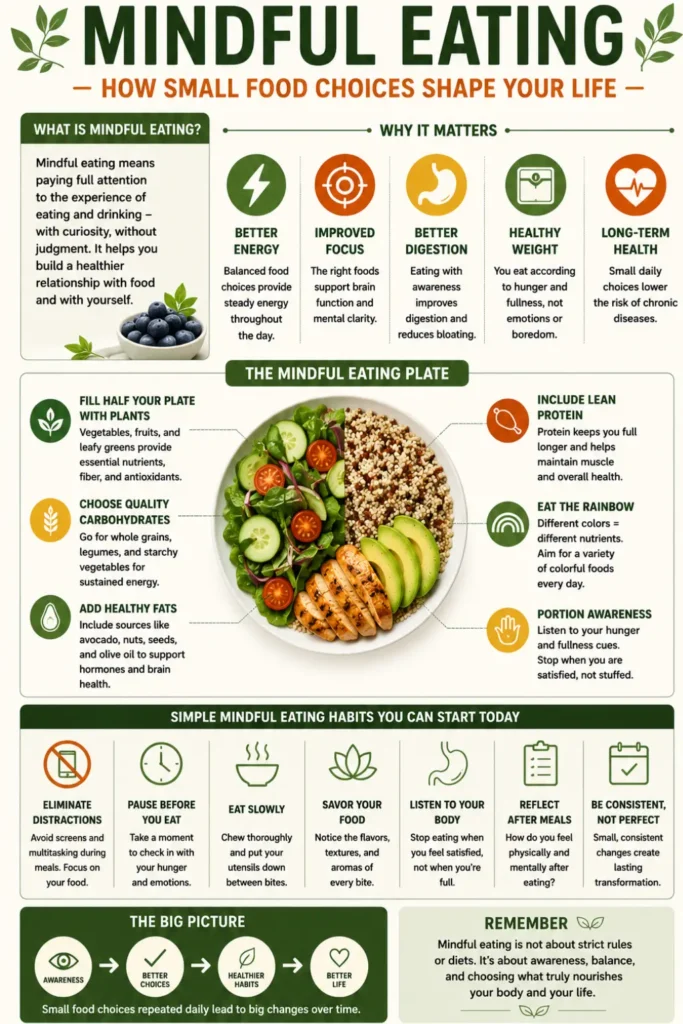
Mindful eating is the practice of paying full attention to your food—what you eat, how you eat, and why you eat. It means slowing down enough to notice your hunger, your habits, and the impact food has on your body.
It’s not a diet, and it doesn’t come with strict rules.
Instead of telling you what you can’t eat, mindful eating helps you understand how your choices affect your energy, focus, and overall well-being. That awareness is what naturally leads to better decisions over time.
In everyday life, most eating is automatic. You eat while scrolling your phone, working, or watching something. You don’t always notice when you’re full, or why you reached for food in the first place. Mindful eating breaks that pattern.
It asks simple but powerful questions:
- Am I actually hungry, or just bored or stressed?
- Does this food make me feel better or worse afterward?
- Am I eating with intention, or just out of habit?
These small moments of awareness change everything.
When you start paying attention, you begin to choose foods that support your body instead of working against it. That might mean eating more whole, natural foods, reducing processed options, or simply eating at a slower pace so your body can respond properly.
Over time, these small shifts build consistency. And consistency—not perfection—is what shapes long-term health.
Mindful eating is also closely connected to mindset. The way you think about food influences the way you consume it. If eating feels rushed, emotional, or unconscious, your choices will reflect that. But when eating becomes intentional, your habits begin to align with your goals.
That’s why mindful eating quotes can be so effective.
They act as reminders—quick mental resets that bring your attention back to what matters. A single line can interrupt an unconscious habit and replace it with a more thoughtful choice.
Because in the end, mindful eating is not about control.
It’s about awareness—and the small, daily decisions that quietly shape your life.
Mindful Eating Quotes (With Meaning and Real-Life Application)
The purpose of these mindful eating quotes is not just inspiration—it’s awareness. Each quote below is paired with a simple, practical way to apply it in daily life.
“When you eat, just eat.”
What it means:
This quote highlights how often eating becomes a secondary activity. Multitasking during meals disconnects you from your body’s signals—especially hunger and fullness.
Real-life application:
Try eating one meal a day without distractions. No phone, no TV—just focus on the food. You’ll naturally slow down, notice flavors, and avoid overeating.
“The food you eat can be either the safest and most powerful form of medicine or the slowest form of poison.” — Ann Wigmore
What it means:
Every food choice has a long-term impact. This isn’t about fear—it’s about understanding that small, repeated choices shape your health over time.
Real-life application:
Instead of changing everything at once, upgrade one daily habit. For example, replace refined grains with whole foods like millets, oats, or brown rice.
“Eat for the body you want, not for the mood you’re in.”
What it means:
Emotional eating is one of the biggest reasons people struggle with consistency. This quote reminds you to separate temporary feelings from long-term goals.
Real-life application:
Next time you crave something impulsively, pause for 60 seconds. Ask yourself: Is this hunger or emotion? That small pause often changes the decision.
“Your body hears everything your mind says about food.”
What it means:
Guilt, restriction, or negative thinking around food can lead to unhealthy patterns. Mindful eating starts with a balanced mindset—not extremes.
Real-life application:
Avoid labeling foods as “good” or “bad.” Focus instead on how they make you feel—energized, heavy, satisfied, or sluggish.
“Slow down and everything you are chasing will come around and catch you.” — John De Paola
What it means:
Rushing meals leads to poor digestion and overeating. Slowing down allows your body to process food properly and signal when you’ve had enough.
Real-life application:
Take smaller bites and chew more. Even a slight reduction in speed can improve digestion and reduce unnecessary calorie intake.
“Take care of your body. It’s the only place you have to live.” — Jim Rohn
What it means:
Food is not just fuel—it’s daily maintenance for your body. Ignoring it leads to long-term consequences that are hard to reverse.
Real-life application:
Think in terms of consistency, not perfection. One balanced meal repeated daily has more impact than occasional “perfect” eating.
“Awareness is the greatest agent for change.”
What it means:
You don’t need extreme discipline to improve your eating habits. You need awareness. Once you notice patterns, change becomes easier and more natural.
Real-life application:
Start tracking—not calories—but behaviors. Notice when, why, and how you eat. Awareness alone often leads to better choices.
Why These Quotes Work
Mindful eating quotes are effective because they interrupt autopilot behavior. They create a moment of pause—a small gap between impulse and action.
And that gap is where better choices are made.
You don’t need dozens of rules or restrictions. You need simple reminders that bring you back to awareness. Over time, those reminders turn into habits, and those habits shape your lifestyle.
Because real change doesn’t come from one big decision.
It comes from small, consistent choices—repeated every day.
How Small Food Choices Shape Your Life
Most people underestimate how powerful small food decisions are. Not because they don’t care—but because the effects aren’t immediate. You don’t feel the impact of one unhealthy meal, just like you don’t see the benefit of one healthy choice.
But over time, those small decisions compound.
What you eat every day quietly influences your energy levels, your focus, your mood, and even your discipline. It shapes how you show up in your work, your relationships, and your daily routine.
Energy Is Built, Not Borrowed
Quick, processed foods often give instant energy—but it doesn’t last. You may feel a short boost, followed by a crash. On the other hand, whole and balanced meals provide steady energy that supports you throughout the day.
This is why small swaps matter. Choosing a more balanced meal—even once a day—can stabilize your energy over time.
Practical shift:
Instead of relying on quick fixes, aim for meals that combine carbohydrates, protein, and healthy fats. This keeps your energy consistent, not unpredictable.
Your Focus Follows Your Food
What you eat affects how clearly you think. Heavy, overly processed meals can leave you feeling sluggish, while lighter, balanced meals help you stay alert.
This isn’t about perfection—it’s about awareness.
When you begin to notice how certain foods affect your concentration, you naturally start choosing what helps you perform better.
Practical shift:
Pay attention after meals. Do you feel focused or tired? Use that feedback to guide your next choice.
3 Habits Are Formed Through Repetition
One healthy meal won’t change your life. But repeating that choice daily will.
The same is true in the opposite direction.
Small habits—good or bad—become automatic over time. Mindful eating helps you break unconscious patterns and replace them with intentional ones.
Practical shift:
Start with one consistent habit. It could be eating at the same time each day, slowing down your meals, or improving just one part of your diet. Consistency matters more than intensity.
Discipline Begins With Daily Choices
Food is one of the few decisions you make multiple times a day. That makes it a powerful place to build discipline.
Every time you choose awareness over impulse, you strengthen your ability to stay consistent—not just with food, but in other areas of life as well.
Practical shift:
Don’t aim for perfect control. Aim for small wins—choosing better once or twice a day is enough to build momentum.
Long-Term Health Is the Result of Small Decisions
Health is not created in a single moment. It’s built slowly, through repeated actions that seem insignificant at the time.
Choosing whole foods more often. Eating with attention. Avoiding constant overeating. These are small decisions, but together they shape your long-term well-being.
Practical shift:
Think in weeks and months, not single meals. One good decision repeated consistently will always outweigh occasional extreme
The Bigger Picture
Small food choices don’t just affect your body—they influence your mindset.
When you eat with awareness, you become more intentional in other parts of your life. You make decisions more consciously, act with more control, and develop a stronger sense of discipline.
That’s why mindful eating is not just about food.
It’s about how you live.
Because in the end, your life is not shaped by one big change—it’s shaped by the small choices you repeat every day.
Simple Mindful Eating Habits You Can Start Today
Mindful eating doesn’t require a complete lifestyle overhaul. It starts with small, repeatable actions that fit into your current routine. The goal is not perfection—it’s awareness and consistency.
Here are practical habits you can begin immediately.
Eat One Meal Without Distractions
Most meals are paired with screens—phones, TV, or work. This splits your attention and leads to overeating without realizing it.
What to do:
Choose one meal a day where you eat without any distractions. Sit down, focus on the food, and notice how quickly your pace changes.
Pause Before You Eat
A lot of eating is automatic. You reach for food without checking if you’re actually hungry.
What to do:
Before your first bite, pause for 10–15 seconds and ask: Am I hungry, or just reacting to habit, boredom, or stress?
That short pause is often enough to shift your decision.
Slow Down Your Eating Speed
Fast eating disconnects you from your body’s signals. By the time you feel full, you’ve already eaten more than needed.
What to do:
Put your spoon or fork down between bites, or simply chew a little longer than usual. You don’t need to count—just reduce your speed slightly.
Notice How Food Makes You Feel
Most people focus only on taste, not on how food affects them afterward.
What to do:
After eating, take a moment to observe:
Do you feel energized, heavy, satisfied, or sluggish?
This feedback helps you naturally choose better foods over time.
Improve One Meal, Not Your Entire Diet
Trying to change everything at once leads to inconsistency. Sustainable change comes from small, focused improvements.
What to do:
Pick one daily meal and make it better—more balanced, less processed, or more intentional. Keep it simple and repeatable.
Keep Your Eating Environment Simple
Your surroundings influence how much and how fast you eat. Cluttered or distracting environments lead to mindless consumption.
What to do:
Eat in a consistent, calm place whenever possible. Even a small shift—like sitting at a table instead of eating on the go—can improve awareness.
Don’t Aim for Perfect—Aim for Consistent
Mindful eating is not about strict rules or eliminating foods. It’s about building awareness over time.
What to do:
Focus on getting it right more often, not always. One mindful choice repeated daily is far more effective than occasional extremes.
Why These Habits Work
These habits are simple, but they target the root problem—automatic behavior.
When you bring attention to how you eat, your choices start to improve naturally. You don’t need constant control or motivation. Awareness does most of the work for you.
And once awareness becomes part of your routine, mindful eating stops being something you try—and becomes something you do without thinking.
Conclusion: Small Choices, Lasting Impact
Mindful eating doesn’t ask you to be perfect. It asks you to be aware.
The quotes you’ve read here are not meant to stay on the page. They’re meant to follow you into your daily routine—into the small, ordinary moments where real decisions are made. What you choose to eat, how you eat it, and why you eat it all shape your life in quiet but powerful ways.
You don’t need to change everything overnight.
Start with one habit. One meal. One moment of awareness.
Over time, those small choices build consistency. And consistency is what creates real, lasting change.
Because your life is not shaped by one big decision—
it’s shaped by what you repeat every day.
Continue Your Journey
If you found these mindful eating quotes helpful, explore more insights that connect daily habits with long-term growth:
- Health Quotes — for broader inspiration on living well
- Discipline Quotes — to build consistency in daily habits
- Self-Care Quotes — to strengthen awareness and balance
- Life Quotes — for perspective on small choices and big impact
Each of these connects to the same idea:
small, intentional actions lead to meaningful change.
Final Thought
The world doesn’t change when you make one perfect choice.
It changes when you start paying attention to the choices you make every day.
And sometimes, that change begins with something as simple as the next meal you eat.