There’s a particular kind of quiet strength most fathers carry. It doesn’t always show up in words — sometimes it’s in the extra shift he picked up without mentioning it, the ride to school he never missed, or the way he stayed up worrying about something he never talked about out loud. Islam has always recognized that kind of quiet sacrifice, and it gives fathers a place of real honor, even when the culture around us doesn’t always say it directly.
Whether you’re looking for something to write in a card, a caption for a photo with your dad, or just words to sit with as you reflect on your own father — or your role as one — these quotes speak to the love, respect, and responsibility that comes with fatherhood in Islam.
At dpquotes.com, we pulled together this collection from the Quran, authentic hadith, and the example of the Prophets themselves, many of whom were fathers navigating the exact same mix of love, worry, and hope that fathers carry today.
The Weight and Honor of Fatherhood in Islam
Fatherhood in Islam isn’t treated as a background role. A father is described as a protector, a provider, and a guide — someone entrusted with raising the next generation with both discipline and mercy. The Quran doesn’t just mention fathers in passing; it includes entire conversations between fathers and their children, offering a kind of blueprint for how that relationship is meant to look.
At the same time, children are reminded repeatedly to honor their fathers — not just when it’s easy, but especially as their fathers grow older and more dependent. It’s a relationship built on mutual responsibility, not one-directional obedience.
Quran Verses About Fathers and Parents
“And your Lord has decreed that you worship none but Him, and that you be dutiful to your parents.”
— Surah Al-Isra 17:23
This verse places honoring parents right alongside worship of Allah — that’s how seriously it’s treated. It’s not framed as an optional kindness; it’s a command that sits close to the core of faith itself.
“And We have enjoined upon man goodness to his parents.”
— Surah Al-Ankabut 29:8
Short, but direct. Goodness toward parents isn’t left up to interpretation or mood — it’s a standing instruction, woven into the fabric of how a Muslim is meant to live.
“O my son, do not associate anything with Allah. Indeed, association [with Him] is great injustice.”
— Surah Luqman 31:13
This is part of Luqman’s advice to his son, one of the most quoted father-to-child conversations in the Quran. It shows a father whose deepest concern for his child isn’t success or wealth — it’s his relationship with Allah.
“O my son, establish prayer, enjoin what is right, forbid what is wrong, and be patient over what befalls you. Indeed, this is of the matters [requiring] determination.”
— Surah Luqman 31:17
Luqman continues his guidance here, and it reads almost like a father’s wish list for his child — not riches, not status, just faith, integrity, and resilience. It’s a moving reminder of what real fatherly love prioritizes.
Hadith About Honoring Fathers
“Your Lord has decreed that a man’s honoring his father is the door to Paradise.”
— Al-Tirmidhi
A striking way of putting it — the door, not a side path. It positions honoring one’s father as central, not optional or secondary to other acts of worship.
“The best charity is that given to a relative who does not like you, and to a father.”
— Reflected in broader hadith principles on family duty
The relationship between fathers and children isn’t always simple. This hadith acknowledges that honoring a father is a duty, not something conditional on the relationship being perfectly smooth.
“Paradise lies at the feet of your mother.”
— Sunan an-Nasa’i
While this specific hadith centers on mothers, it’s often cited alongside teachings on fathers because it reflects the same broader principle in Islam — parents, as a pair, hold a position that directly affects a person’s path to Paradise.
Quotes on a Father’s Love and Sacrifice
“The example of a good companion and a bad companion is that of a person carrying musk and a person blowing a blacksmith’s bellows.”
— Sahih Al-Bukhari
Fathers are often the first “companions” a child has, shaping who they become long before friends or mentors enter the picture. This hadith is a quiet reminder of just how much influence that early presence carries.
“Whoever is not merciful to our young ones and does not acknowledge the honor due to our elders is not one of us.”
— Sunan Abi Dawood
Fatherhood carries this same dual responsibility — mercy toward children and honor toward elders — often at the same time, especially for fathers caring for both a young family and aging parents.
Dua for Fathers
Prayer is one of the most meaningful ways to honor a father, whether he’s still with you or has passed on.
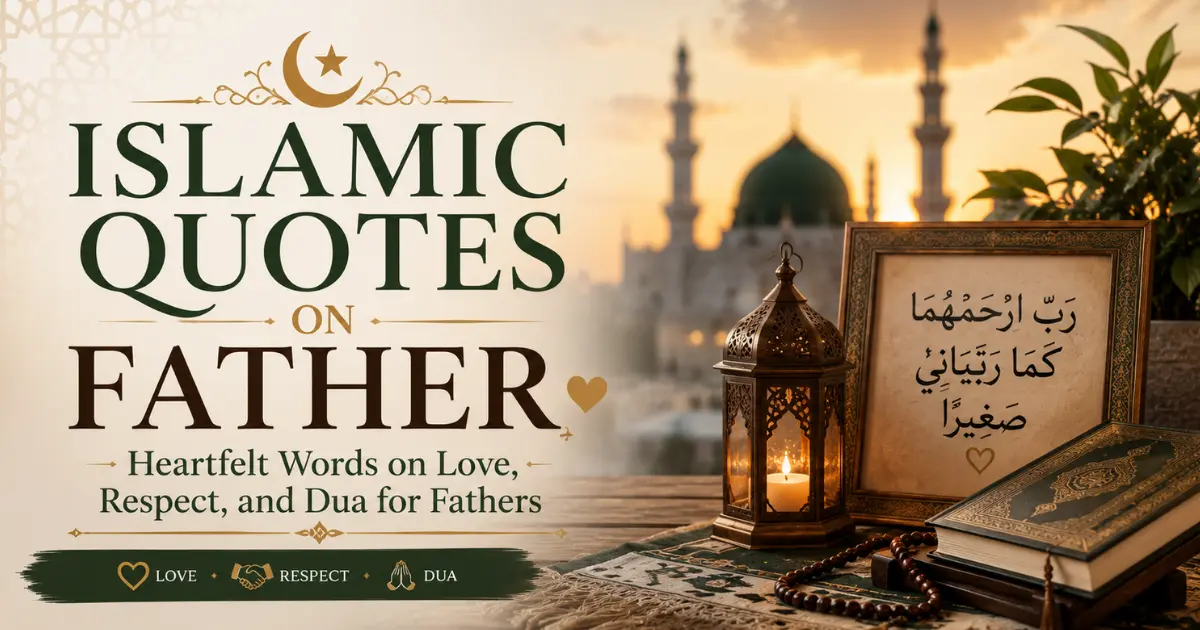
“My Lord, bestow on them Your mercy as they cared for me in childhood.”
— Surah Al-Isra 17:24 (adapted phrasing)
This dua is one of the most beautifully constructed in the Quran — it doesn’t just ask for blessings, it directly ties the request to the care a father once gave, asking Allah to return that same mercy multiplied.
“Our Lord, forgive me and my parents and the believers on the Day the account is established.”
— Surah Ibrahim 14:41
This is part of Prophet Ibrahim’s own dua, and it’s a powerful reminder that even a Prophet made a point of praying specifically for his parents, not just for himself.
Quotes for Fathers Who Have Passed Away
Grief for a father doesn’t follow a schedule, and these words offer a way to hold onto both loss and hope at once.
“When a person dies, his deeds come to an end except for three things: ongoing charity, beneficial knowledge, or a righteous child who prays for him.”
— Sahih Muslim
This hadith is especially meaningful for children who’ve lost their fathers. Every dua you make for him, every act of goodness inspired by how he raised you, continues to reach him. Grief becomes an active form of love, not just an ending.
What Islam Teaches About Being a Good Father
Beyond honoring fathers, the Quran and hadith also offer real guidance for fathers themselves — how to raise children with both love and responsibility.
“Command your family to pray and be patient in observing it.”
— Surah Ta-Ha 20:132
Faith is described here as something a father actively guides his family toward, not something he assumes will happen on its own.
“Each of you is a shepherd, and each of you is responsible for his flock.”
— Sahih Al-Bukhari
This hadith is often quoted specifically in the context of fatherhood, framing leadership within the family as a form of caretaking and accountability, not control.
How to Honor Your Father’s Memory or Presence Today
A few simple, meaningful ways to put these teachings into practice:
- Make dua for him regularly, not just on special occasions — a quiet moment after prayer is enough.
- Speak to him with patience, especially as he grows older and roles begin to shift.
- Share a favorite quote or verse with him directly, rather than saving it only for a caption or card.
- If he’s passed, give charity on his behalf — it’s one of the deeds that continues to reach him.
- Reflect on what he taught you, even quietly, and try to pass that same care forward.
FAQs About Islamic Quotes on Fathers
The Quran places honoring parents directly alongside worship of Allah in Surah Al-Isra 17:23, describing it as a firm command rather than an optional kindness.
Yes — the dua in Surah Al-Isra 17:24, asking Allah for mercy upon parents as they cared for their children in childhood, is one of the most commonly recited duas for fathers, both living and deceased.
According to Sahih Muslim, a person’s deeds continue after death through three things: ongoing charity, beneficial knowledge, and a righteous child’s dua. Making regular dua and giving charity on his behalf are both meaningful, lasting ways to honor him.
Yes. Hadith like “each of you is a shepherd, and each of you is responsible for his flock” frame fatherhood as a form of caretaking and accountability, while other teachings emphasize mercy and patience alongside discipline.
Final Thoughts
Fatherhood, in Islam, is never treated as a small role — it’s one tied directly to mercy, responsibility, and honor on both sides of the relationship. Whether you’re reflecting on your own father, praying for one who’s passed, or trying to be a better one yourself, these words offer both guidance and comfort for every part of that journey.
Which of these quotes reminded you most of your own father? Save it, share it with him if you can, and check back on dpquotes.com — we’re always adding new reflections to help you honor the people who shaped you.
Looking for more general father quotes? Check out our Father Quotes post for words on love, sacrifice, and tribute